
Cricket's Next Decade: Calendar Overload, the Olympic Door and the Limits of the Player
सारांश: क्रिकेट का सबसे बड़ा आगामी संकट तीन प्रारूपों (टेस्ट, वनडे, टी20), आईसीसी की वैश्विक प्रतियोगिताओं और दुनिया भर की फ्रेंचाइज़ी लीगों के बीच कैलेंडर टकराव है। मुख्य बिंदु: (1) आईसीसी का एफ़टीपी केवल अंतरराष्ट्रीय मैचों को नियंत्रित करता है, लीगों को नहीं; (2) आईसीसी सदस्य बोर्डों का संघ है, बाध्यकारी नियामक नहीं, इसलिए वैश्विक समन्वय कमजोर है; (3) तेज़ गेंदबाज़ों पर कार्यभार का सबसे अधिक दबाव; (4) प्रसारण अधिकार आय का सबसे बड़ा स्रोत होने के कारण मैचों की संख्या घटाना बोर्डों के लिए अव्यावहारिक; (5) 2028 लॉस एंजिल्स ओलंपिक में क्रिकेट (टी20 प्रारूप) शामिल होने से नई निश्चित विंडो बनेगी और टी20 का दबदबा और बढ़ेगा; (6) टेस्ट क्रिकेट आर्थिक रूप से कुछ ही देशों में लाभदायक है, विश्व टेस्ट चैंपियनशिप ने ढांचा दिया पर मूल असमानता नहीं हटाई; (7) छोटे बोर्डों और महिला क्रिकेट पर इसका असमान प्रभाव; (8) संभावित समाधान — बाध्यकारी वैश्विक विंडो प्रणाली, अनुबंधों में कार्यभार सीमा, और राजस्व का पुनर्वितरण। निष्कर्ष: अगला दशक तकनीकी नहीं, प्रशासनिक होगा; निर्णय मैदान पर नहीं, बैठकों में होगा।
Cricket's Next Decade: Calendar Overload, the Olympic Door and the Limits of the Player
Cricket is the only major sport that runs three formats of radically different length at international level with comparable seriousness. A Test match occupies five days, a one-day international compresses the game into one, and a T20 finishes in about three hours. Each has its own audience, its own broadcast contract, its own economic logic and its own administrative scaffolding. That plurality is cricket's greatest strength — and, at present, its most intractable problem.
Over the past few years the global calendar has reached a point where every international series is played at the cost of another. Bilateral series between national teams, ICC global events and the franchise leagues scattered across the world all claim the same finite pool of weeks. The player sits at the weakest point of that chain, because he or she neither designs the calendar nor enjoys any practical freedom to refuse it.
This analysis is not a review of a single match, series or controversy. It is an attempt to map the structural pressures that will determine cricket's shape over the coming years: the arithmetic of the calendar, the physical limits of the player, the economics of broadcast, the political significance of Olympic entry, the survival question facing Test cricket, and the capacity of the governance system to act.
The arithmetic: too few weeks, too many claims
The ICC Future Tours Programme is the formal map of international cricket. It determines who plays whom, how often and in which format. Its stated purpose is to reduce uncertainty and give broadcasters a predictable schedule. But the FTP is a document about international matches only. It does not absorb the franchise leagues that have reshaped cricket's economic and cultural geography over the past decade.
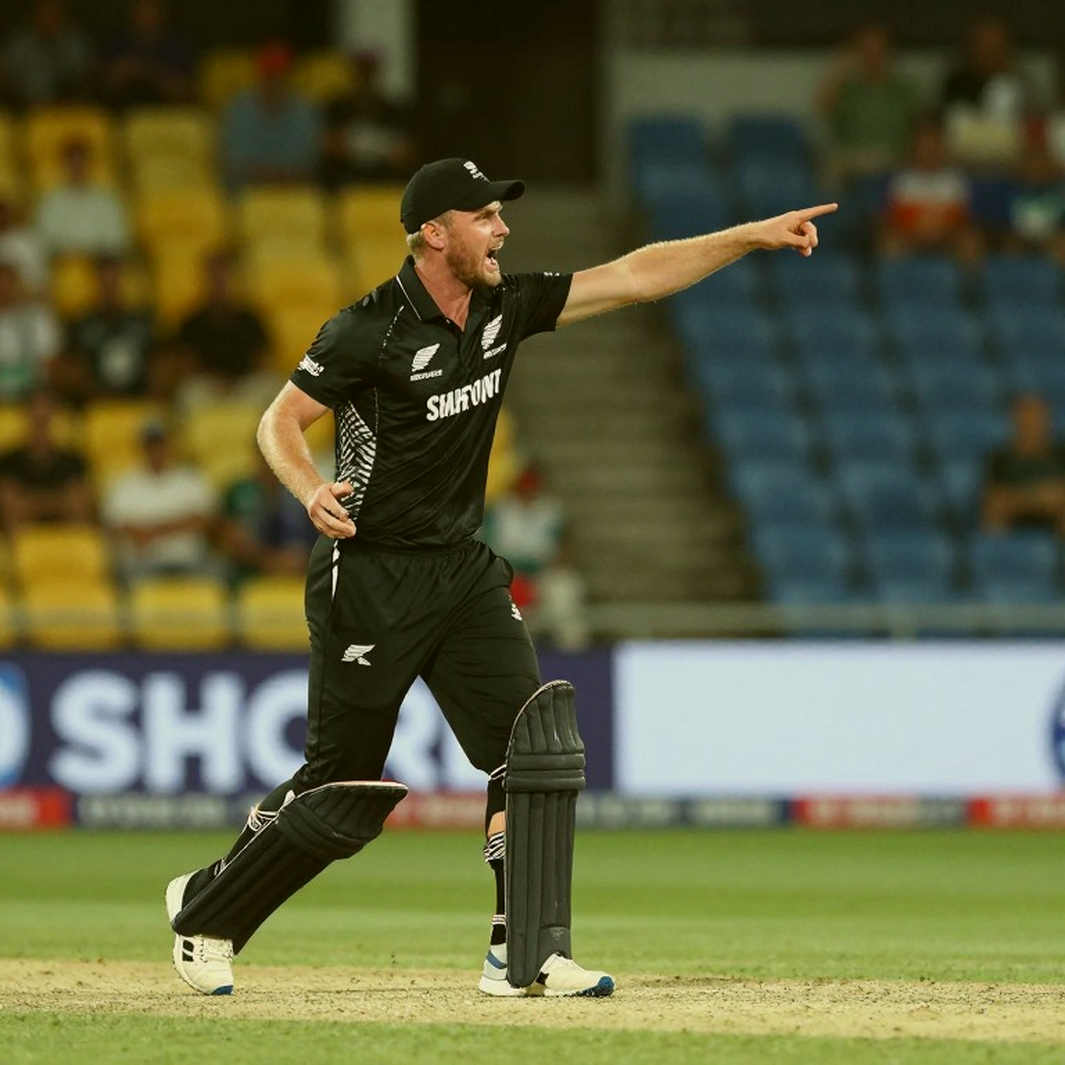
The result is that a national team's real calendar is the sum of two separate documents: the ICC's and the relevant board's domestic league. When they collide, the decision usually favours the economically stronger party. That collision is no longer an exception; it is the norm.
A deeper problem is that cricket has no single central scheduler. The ICC is a federation of member boards, not a regulator. Its authority depends on the cooperation of those members, and members prioritise their home markets. In a system where every board wants its league to be competitive, the goal of global coordination is structurally weak.
The player: physical limits and mental fatigue
The problem is sharpest for fast bowlers. A professional quick's workload differs across formats, but the body is the same. A bowler who sends down fifteen to twenty overs in a Test innings is then asked to produce four maximum-effort overs in a T20 the following week. The demands are different, and the recovery window between them is inadequate.
The injury list among the world's fastest bowlers in recent years is not the fault of one tournament or one board. It is the output of a system in which a player, in the most valuable years of a career, must repeatedly choose which competition to skip — and that choice is frequently not his or hers to make.
Mental fatigue is now discussed openly, though the problem is not new. Constant international travel, a generation shaped by biosecure bubbles, and the pressure of an always-on social media environment all affect performance. Several boards have formally added mental-health support to their structures. But having a support system and changing the terms of a career are different things.
Player associations, including the Federation of International Cricketers' Associations at the global level, have long sought explicit workload provisions in contracts. Their argument is straightforward: if the calendar is expanding for commercial reasons, the cost should be borne commercially — not by the player's body and career.
The economics of broadcast: why the calendar does not shrink
The most direct reason the calendar grows is that cricket's broadcast rights are among the most valuable in world sport. The Indian market is central to this. Rights sales for franchise leagues run into the billions of dollars, and for national boards they have become the single largest source of revenue.
When a board plans its financial year, the broadcast contract is its most reliable forecast. Series, tournaments and league seasons are the instruments by which that contract is fulfilled. In this structure, cutting the number of matches means voluntarily shrinking a revenue line — and no board does that willingly, however clearly it understands the problem.
Here cricket's structural weakness becomes visible. In other global sports, a central body sets the international calendar with binding force and can sanction breaches. Cricket has no such power. The ICC has incentives, not an effective enforcement mechanism. Each board expands the calendar in its own interest and everyone loses collectively.
The 2028 Olympic door: new opportunity, new constraint
The decision by the International Olympic Committee to include cricket in the Los Angeles 2028 programme is the most significant structural event in the sport in decades. It belongs to the Olympic movement's expansion logic, which has given several new sports a stage in recent cycles. For cricket it matters on three levels.
First, Olympic visibility raises the sport's profile in countries where it is not traditionally played; the growing United States market is central here. Second, Olympic affiliation creates a new argument for governments to fund the sport — an argument that matters to boards without large broadcast contracts. Third, inclusion in the Olympic programme creates a fixed date around which everything else must be arranged.
That third point is also the difficulty. The Olympics occupy a fixed window, and several weeks around it must be reserved for preparation, qualification and tapering. Adding a new obligation to a calendar that is already full means subtracting something else. What gets subtracted is likely to be the most contested administrative question of the coming years.
A less discussed aspect: to fit the Olympic programme, a sport needs a short, simple format, and T20 is the natural choice. This further entrenches T20's primacy. Over the long run it may tilt the international calendar further toward the format widely regarded as having the least technical depth and the greatest result variance.
Test cricket: small in revenue, large in identity
Test cricket's economic position sits far below its cultural position. Only a handful of countries stage profitable Tests on ticket sales and broadcast. Elsewhere the format is primarily an expense that boards carry for reasons of tradition, prestige and competitive balance.
The World Test Championship was a partial answer. It gave Test cricket a table, a winner and a final. That structure is an improvement, but it does not solve the underlying problem: most Test cricket is played between pairs of countries whose bilateral relationship is the least commercially valuable.
The effect on competitive balance is direct. Teams with large broadcast deals can give players better facilities, more support staff and more home matches. Smaller boards cannot. The gap compounds across generations, because a strong support structure produces longer careers, and longer careers produce accumulated experience.
Governance: does the ICC have the tools?
Cricket's governance contains a fundamental tension. The ICC's members are national boards, and those boards also own the regulator. A body whose regulator is elected by the entities it regulates cannot comfortably enforce rules that cut against those entities' immediate interests.
This tension has surfaced repeatedly in recent years — over scheduling, over revenue distribution formulae, over membership rights. None of these disputes is technical; all are questions of power.
One frequently floated remedy is an independent calendar authority sitting above members and able to make binding decisions. Resistance is natural, because it would mean a transfer of sovereignty. But what is the alternative? The alternative is what is currently underway: uncoordinated expansion, with the cost pushed onto players and domestic competitions.
Smaller boards and women's cricket: two faces of inequality
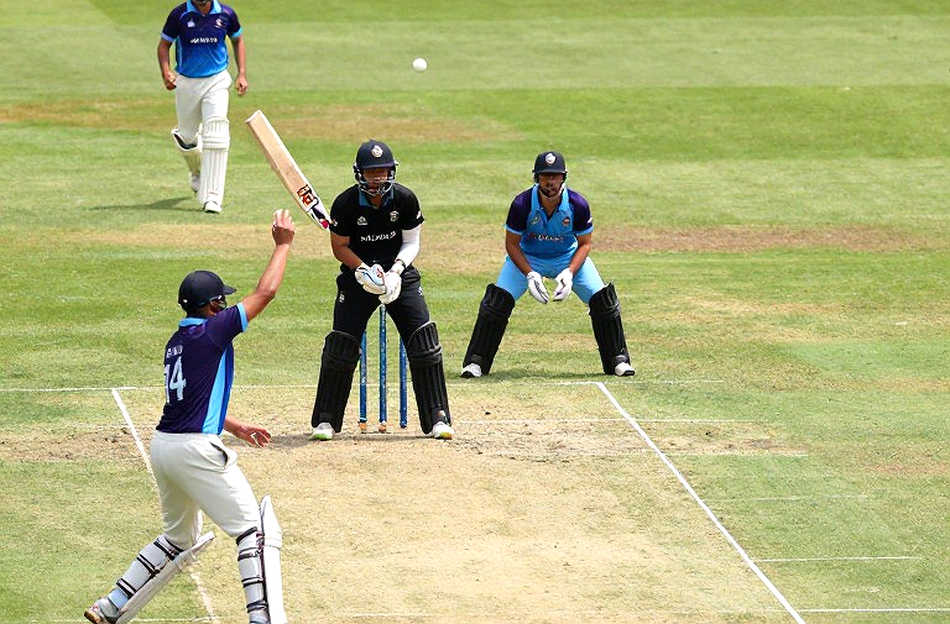
The calendar problem does not affect everyone equally. Countries with large markets and strong leagues retain some room to adapt: they can rest players from selected series, or reshuffle their domestic schedules. Smaller boards have no such flexibility. For them every international series is an essential revenue source, however inconvenient its place in the calendar.
For women's cricket the inequality doubles. Women's competitions have expanded rapidly in recent years, which is unambiguously positive. But that expansion is happening inside a calendar that is already full. Women players often have less security, less pay certainty and less infrastructure than their male counterparts, while facing greater pressure to prove their competitions commercially viable.
Data and science: what can be measured
Recent years have seen growing scientific measurement of player workload. Distance covered, balls bowled, count of high-intensity efforts, sleep and recovery markers — most teams now have access to such data. This progress is real and has prevented injuries.
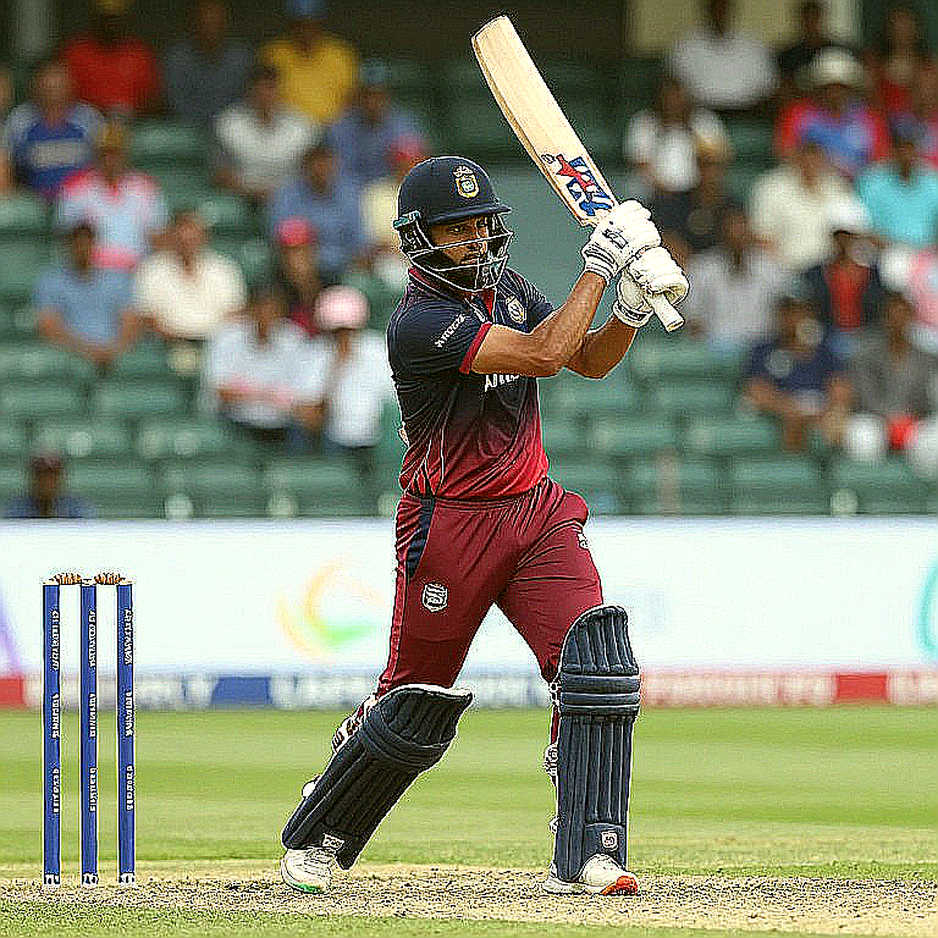
But having data and acting on it are different things. When the terms of the calendar are set by boards and broadcasters, measurement often ends up being used to explain to a player why he or she can play — rather than to decide whether he or she should. Technical tools are neutral; their application is political.
What next: the available paths
Three practical remedies are in circulation. First, a binding global window system for all formats, with distinct reserved periods for international cricket and for franchise leagues. Second, legally embedding maximum workload limits in player contracts, as some other sports do. Third, a redistribution of revenue that lets smaller boards build domestic structures, so that they do not survive solely by adding international fixtures.
None is easy, because each requires someone to give up an immediate advantage. But it must be acknowledged that the current path is not sustainable. A system in which leading players are repeatedly forced to choose which competition to skip ultimately damages the competitions it is trying to protect.
Conclusion
Cricket's next decade will be administrative rather than technical. Room for improvement inside the sport itself is largely exhausted: the formats are mature, the talent pool is deeper than ever, and audience interest is broad. What constrains the sport is its own management.
The 2028 Olympics will be a test. If cricket arrives there as a well-organised sport with a clear calendar and a record of protecting its players, this decade will be its greatest expansion. If it arrives exhausted, fragmented and consumed by internal disputes, the largest share of the opportunity will be lost.
The decision will be made in meeting rooms, not on the field. And the sooner it is made, the better.