
Kabaddi: From the Mud Akhada to the Global Stage — The Full Story of a Sport
कबड्डी एक संपर्क खेल है जिसमें सात-सात खिलाड़ियों की दो टीमें होती हैं। एक रेडर विरोधी आधे हिस्से में लगातार 'कबड्डी' बोलते हुए जाता है, रक्षकों को छूकर लौटता है और अंक लाता है; पकड़े जाने पर वह आउट होता है। सभी रक्षकों के आउट होने पर 'लोना' होता है। यह 1990 से एशियाई खेलों का पदक खेल है और 2014 से प्रो कबड्डी लीग के ज़रिये पेशेवर रूप में लोकप्रिय हुआ।
Kabaddi is one of the few sports in the world where the measure of victory is not a ball, a bat or a racket, but a breath. No equipment, no protective gear — just lungs full of air and a single word that a raider repeats in a relentless monotone as he crosses into enemy territory. Seven defenders wait for him. He has to escape a web of more than three dozen arms, shoulders and legs and make it back across the half line. If the chant breaks, the raid is over. If the route disappears, the points are gone. That bare, almost brutal clarity is kabaddi's signature.
The sport has been played in the Indian subcontinent for centuries in one form or another, across almost every state, with the name changing every few hundred kilometres. In Maharashtra it is called hu-tu-tu; in Tamil Nadu and Karnataka, chedugudu; in eastern India, ha-du-du; and elsewhere, kabaddi. In Bangladesh it thrives as ha-du-du; in Nepal as kabaddi; in Iran as zu-zu; in Thailand a parallel tradition exists. The names differ, but the spirit of the rules is identical — one player goes alone, and everyone else tries to stop him.
The oldest literary echoes of the game are often traced to the chakravyuh episode in the Mahabharata, in which Abhimanyu enters an enemy formation alone and cannot find his way out. That metaphor describes kabaddi's core strategy with striking accuracy. Buddhist texts also mention physical contests, though drawing a direct line from these ancient references to modern kabaddi remains contested among historians. What is certain is that the folk form is centuries old, while its organised, codified version is a product of the twentieth century.
Traditionally, three major styles of kabaddi were in circulation. In the 'Amar' form there was no strict limit on the raider's breath or the length of a solo raid, and touching an opponent was not compulsory. The 'Suranjeevi' form imposed somewhat tighter rules. In the 'Gaminee' form play stopped when all players had been caught — in effect, the idea of the all-out. Folding these three traditions into a single rulebook became the foundation of modern kabaddi.
The modern history of organised kabaddi begins around 2026, when the first attempt to standardise the rules was made in India. At the 2026 Berlin Olympics the sport was demonstrated — a symbolic moment for pre-independence Indian sports administration. In 2026 the All India Kabaddi Federation was founded, and the first National Championship was held in 2026. During the same decade schools and universities began to include the sport in their athletic curricula, giving players a structure that could go beyond village-based training.
Expansion at the national level meant that by the 1980s kabaddi in India had become a competitive sport with a state-by-state structure. Meanwhile the rules underwent necessary changes: the raid was time-limited, closing the door on stalling tactics. Provisions such as bonus points, super tackles and revival added strategic depth and reduced the likelihood of one-sided contests. These reforms made the sport far more readable for audiences.
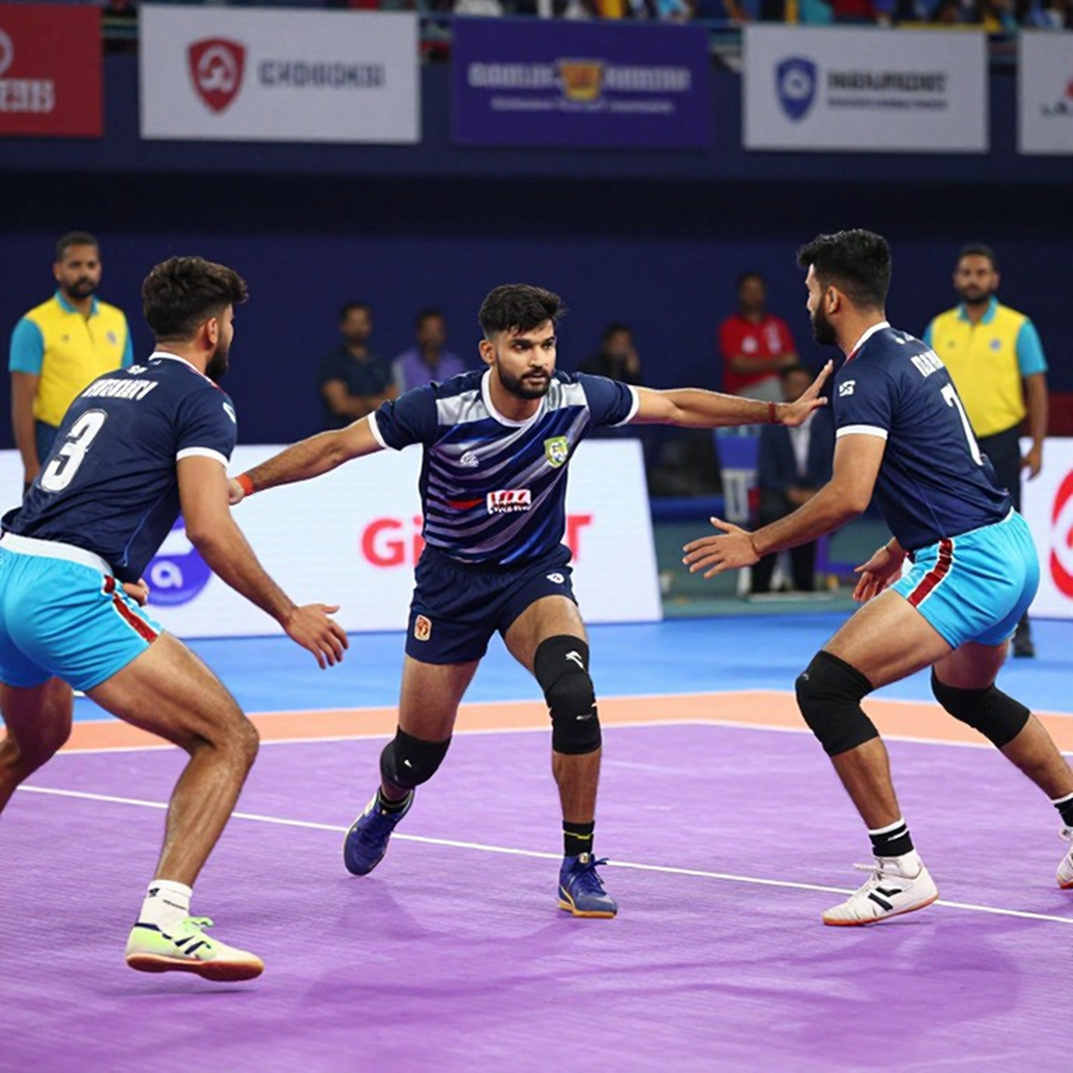
The professional kabaddi field of today is standardised, yet the spirit of simplicity survives. Seven players take the mat for each side, and players return from the bench through revival. A raider must enter the opponent's half while continuously chanting 'kabaddi'. If he pauses, or forgets to repeat the word in order to breathe, the raid ends. If he touches even one defender and returns safely, the point is his. If the defenders catch him, the point is theirs and the raider is out. When all defenders are out, an all-out or 'lona' is scored: the opposing team earns two extra points and its entire line returns — kabaddi's most dramatic moment.
Strategy rests on two clear poles: attack and defence. A good raider is quick, but decision-making matters more — when to go, whom to touch, when to retreat, and when to come back having done nothing at all. On the defensive side, the cover and corner pairing does the work; the corner is usually the first and last line of interception against a raider. The do-or-die raid has changed the sport's emotional terrain in recent years: on a third unsuccessful raid, the raider must score or be eliminated. That forces players to take risks, and gives spectators a dramatic tension that rule-free kabaddi never had.
Internationally the sport is governed by the International Kabaddi Federation (IKF), founded in 2026. Its founding members included, alongside India, countries such as Iran, Bangladesh, Japan, Korea, Thailand, Malaysia, Nepal and Sri Lanka. At the continental level the Asian Kabaddi Federation operates. The greatest contribution of these bodies has been to give the sport a shared rulebook and a shared calendar, providing international fixtures with recognition and continuity.
Kabaddi entered the Asian Games at the 2026 Beijing edition and has been a permanent part of the medal table ever since. For the first two decades India's dominance in the men's event was near-total — gold in successive editions. That dominance gave the sport popularity but created a competitive problem: results seemed predetermined. It was Iran that broke the monotony, establishing itself at the top through systematic coaching, physical conditioning and a defence-first strategy. At the 2026 Jakarta Asian Games Iran won gold and proved that kabaddi is no longer one country's game. India returned to the top in later editions, but genuine competition now exists at every major tournament.
Women's kabaddi gained a formal international platform at the 2026 Guangzhou Asian Games and has been part of the medal table since. The Indian women's team dominated early editions, but teams such as Iran and Bangladesh have raised their level quickly. The growth of the women's game matters because it has doubled the sport's base — widening recruitment, expanding coaching structures and improving family and social acceptance.
The development that most transformed the sport's landscape, at home and globally, was the launch of the Pro Kabaddi League in 2026. It was a franchise-based league with city teams, a professional television production, and a player auction for selection. Jaipur Pink Panthers won the first season. What the league did was new for any Indian sport: it turned kabaddi from a tournament into a television product. Camera angles, slow-motion replays, commentary, graphics and player-centred storytelling drew in audiences that would never have reached a stadium.
The league's economic model reshaped the sport's ecosystem. Auction prices rose, players from rural backgrounds suddenly gained national visibility and income, and demand grew for training in state associations and academies. A less noticed but important effect was that in many families kabaddi ceased to be 'the sport you play instead of studying' and became a career option.
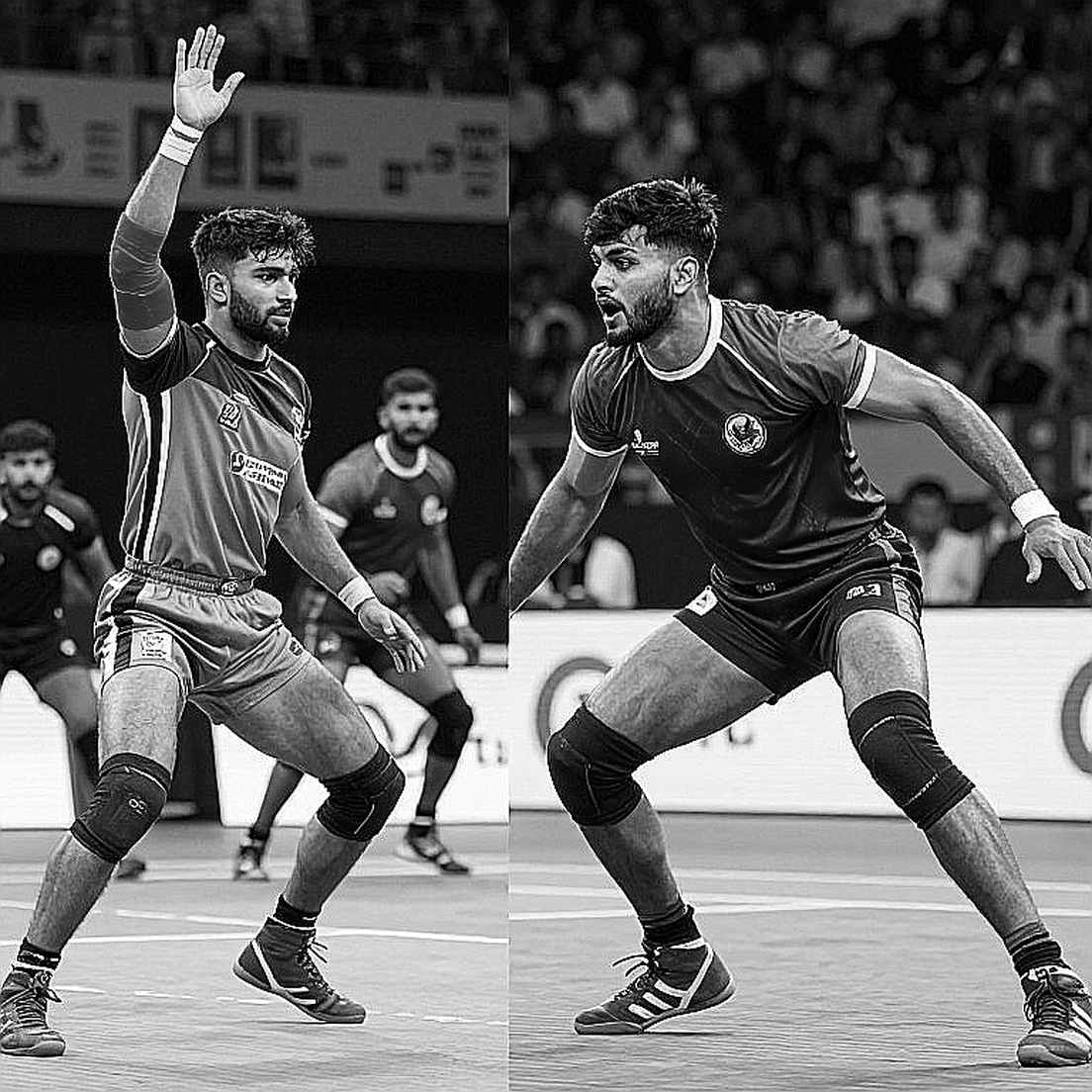
The league also manufactured player identities. Anup Kumar is counted among India's most stable captains — known for calm leadership and the ability to make the right decision under pressure. Ajay Thakur is associated with aggressive raiding and performance on the biggest occasions, playing decisive roles in important Indian victories. Pardeep Narwal became one of the league's most talked-about raiders for his speed and his capacity to accumulate points relentlessly. Fazel Atrachali has a distinct identity in both Iran and the league — aggressive defence in which he traps raiders near the boundary line. Young raiders such as Naveen Kumar showed that the league can function as a ladder for emerging talent.
But commercial success brought structural challenges too. The biggest is that the league cycle and the national team cycle do not always align. Players face year-round competitive pressure, which raises injury risk and shortens recovery time. Kabaddi is physically punishing — repeated load on knees, ankles and shoulders, collisions, and sudden changes of direction. Managing these injuries within a professional calendar is a continuing challenge.
The second challenge is administrative. In India several bodies and leagues have operated in parallel, forcing players to navigate separate recognition systems. Internationally too, two forms of the sport coexist — the standard form and circle style. That diversity is evidence of the sport's popularity, but in the absence of a unified ranking and a clear qualification pathway it can create confusion.
The third challenge is financial sustainability. The league model depends on broadcast rights and sponsorship. When those revenue streams are strong, players are paid well; but market fluctuations transmit directly into the sport's ecosystem. Infrastructure, coaching and medical support in smaller towns and rural areas remain uneven — and that inequality determines where talent emerges and where it is smothered.
Technology has pushed the sport in a new direction. Video analysis is now used to measure a raider's speed, his favoured foot, his directional tendencies and the positioning of defenders. Teams mine patterns from footage of past matches — which corner loosens when, which raider errs under pressure on the third raid. Fitness tracking and load management have made training more scientific. The change is gradual and has not reached all teams equally, but the direction is clear: kabaddi is no longer only a game of courage and instinct, but also of preparation and information.
The story of international expansion matters just as much. Iran is now an established power with a strong domestic structure and coaching system. In Bangladesh the sport's popularity is traditionally deep and forms part of national identity. South Korea has registered its presence at the Asian level. Japan, Thailand, Malaysia, Indonesia and Sri Lanka are developing organised structures. Beyond Asia, countries such as Kenya, Uganda, Poland, England, Australia and the United States are adopting the sport, largely through the efforts of diaspora communities and local federations. Achievements there remain at an early stage, but their participation gives the sport's global claim a real foundation.
Broadcasting and storytelling have changed the sport's image as well. Kabaddi was once seen as rural, masculine and low-tech. Television has now made it player-centric, strategic and cinematic. When a player is injured the camera goes to his face; the moment of revival is shown in slow motion; every match becomes a story. The change has affected social perception — the sport now offers a clear route of upward mobility for players from rural India.
The biggest question is what comes next. Talk of kabaddi's entry into the Olympics has continued for decades, but the path is complex. The Olympic programme demands a certain level of global participation, clear and uniform rules, transparent governance and an anti-doping system. Kabaddi has some of these, not all. The Asian Games calendar and a growing professional league structure help, but work remains before a genuine global claim can be made.
Similarly, the sport needs a clear and stable global calendar in which national team fixtures, continental championships and league seasons do not cannibalise each other's windows. Issues such as a players' union and a welfare fund are no longer marginal. When a sport becomes professional, explicit arrangements are needed for post-retirement life, injury management and income security.
Yet amid these challenges the future looks bright. Kabaddi's greatest strength is that it requires almost nothing to play — no bat, no ball, no expensive armour. An open field, a few players and the enthusiasm of children are enough. In the twentieth century that simplicity carried it into every village of the subcontinent; in the twenty-first it has carried it to the world through television and franchise economics.
But one thing is worth remembering on this journey. Kabaddi's true identity never lay in its graphics, its team branding or its auction prices. It lay in the moment when a player, holding his breath under control, slips through seven opponents — and advances knowing that everything could be decided on the next breath. After every change, the centre of the sport should remain right there. Asian Games medals, league records and broadcast numbers can lift it higher, but they cannot replace that core.
That is why any effort to make kabaddi globally competitive must ensure the base stays strong — sport in schools, local competitions, coaching education, equal opportunity for women players, and infrastructure in rural areas. If investment grows at the top and not at the base, the sport will lose its greatest strength: its breadth.
It is said that kabaddi teaches you that you must go alone and return with the team. That is its entire grammar. One person advances, the team supports him, and if he is trapped, another takes his place. This structure of the sport is the simplest and most beautiful metaphor for collective responsibility. It was as true on a village field in the twentieth century as it is in a large stadium today. The soil changed, the dates changed, the graphics changed — but the soul of this sport that runs on breath did not. And perhaps that is why kabaddi has become one of the most-watched sports in India.
संबंधित खिलाड़ी
अनुशंसित
Stop Calling Iran an Upset: 18-27 Was Structure, Not Accident2026-10-25
What Happens on the Mat Never Fits the Card: The Kabaddi Count We Never Run2026-11-01
Kabaddi: From the Mud Akhada to the Global Stage — The Full Story of a Sport2026-11-01
India vs England, Match 4: In Ahmedabad, the Squad Audit Matters More Than the Scoreline2026-10-28
62 Matches, 13 Nations and One Missing Name: What Ahmedabad's Kabaddi Gamble Actually Rests On2026-10-22
Commonwealth Kabaddi Championship 2026: Surjeet Singh Captain, Naveen Kumar Vice-Captain — Three Empty Columns in the Announcement2026-10-22
India vs Uganda, Commonwealth Kabaddi Championship 2026: The 26 Points Beneath the 46, a Borrowed Label and a 2026 Error2026-10-30
अनुशंसित
Commonwealth Kabaddi Championship 2026: The Day 1 Table Is Arithmetically Correct, Analytically Incomplete2026-10-30
Surjeet Captain, Naveen Vice-Captain: What the Commonwealth Kabaddi Championship Release Never Says2026-10-22
Stop Calling Iran an Upset: 18-27 Was Structure, Not Accident2026-10-25
Commonwealth Kabaddi Championship 2026: Surjeet Singh Named Captain, Naveen Kumar Vice-Captain — But the Real Question Is Somebody Else's2026-10-22
369 Raid Points and a One-Man Monopoly: Patna's Three-Peat Was a Fixture List and a Raid Economy, Not a Dynasty2026-10-25
Kabaddi: From the Mud Akhada to the Global Stage — The Full Story of a Sport2026-11-01
Ahmedabad's First Commonwealth Kabaddi Chapter: 62 Matches, 13 Nations, and an Unspoken Absence2026-10-22