
Kabaddi: From the Mud Akhara to the Broadcast Mat, a Folk Sport's Professional Journey
कबड्डी क्या है? कबड्डी भारत में जन्मा एक संपर्क टीम खेल है जिसमें सात-सात खिलाड़ियों की दो टीमें होती हैं; खेल का मुख्य कौशल 'रेड' है, जिसमें एक खिलाड़ी विपक्षी पाले में जाकर लगातार 'कबड्डी' बोलते हुए 30 सेकंड के भीतर लौटता है। अंक बोनस, टैकल, सुपर टैकल और ऑल-आउट (लोना) से मिलते हैं। कहाँ खेली जाती है? अंतरराष्ट्रीय स्तर पर एशियाई खेलों में 1990 से पुरुष और 2010 से महिला कबड्डी पदक खेल है; घरेलू स्तर पर भारत में राष्ट्रीय चैंपियनशिप, खेलो इंडिया और प्रो कबड्डी लीग मुख्य मंच हैं। प्रो कबड्डी लीग क्या है? 2014 में आठ टीमों के साथ शुरू हुई यह फ्रैंचाइज़ी लीग 2017 से बारह टीमों की है और इसका मुख्य आकर्षण खिलाड़ी नीलामी तथा टेलीविज़न प्रसारण है। प्रमुख प्रतिस्पर्धी देश कौन से हैं? भारत, ईरान, बांग्लादेश, दक्षिण कोरिया, जापान, थाईलैंड और केन्या; ईरान ने 2018 जकार्ता एशियाई खेलों में पुरुष स्वर्ण जीता। मुख्य चुनौतियाँ क्या हैं? लीग पर अत्यधिक निर्भरता, सीमित अंतरराष्ट्रीय कैलेंडर, महिला लीग की सीमित पहुँच और चोट-प्रबंधन।
Kabaddi is one of the few team sports in the world that needs no equipment at all. No ball, no bat, no expensive gear. Two teams of seven, a few lines drawn on a flat surface, and a single chant repeated on one breath — 'kabaddi, kabaddi'. That simplicity has always been its greatest strength, and, historically, its weakness too: what is available for free everywhere is hard to price. Much of what has changed in India over the past decade is an attempt to rewrite exactly that equation.
The sport's history sits in folk memory and in ancient texts alike. The Abhimanyu-chakravyuh episode of the Mahabharata is often linked to an older form of kabaddi, though it should be read as cultural context rather than historical evidence. What is certain is the variety of names across languages and regions — hu-tu-tu in Maharashtra, ha-du-du in Bengal and Bangladesh, chedugudu in Andhra Pradesh, sadugudu in Tamil Nadu and kabaddi in northern India. The names changed and the rules bent to local needs; that adaptability is the sport's real inheritance. By the late 1930s, according to widely repeated accounts, national-level rules had begun to be standardised and international demonstrations followed.
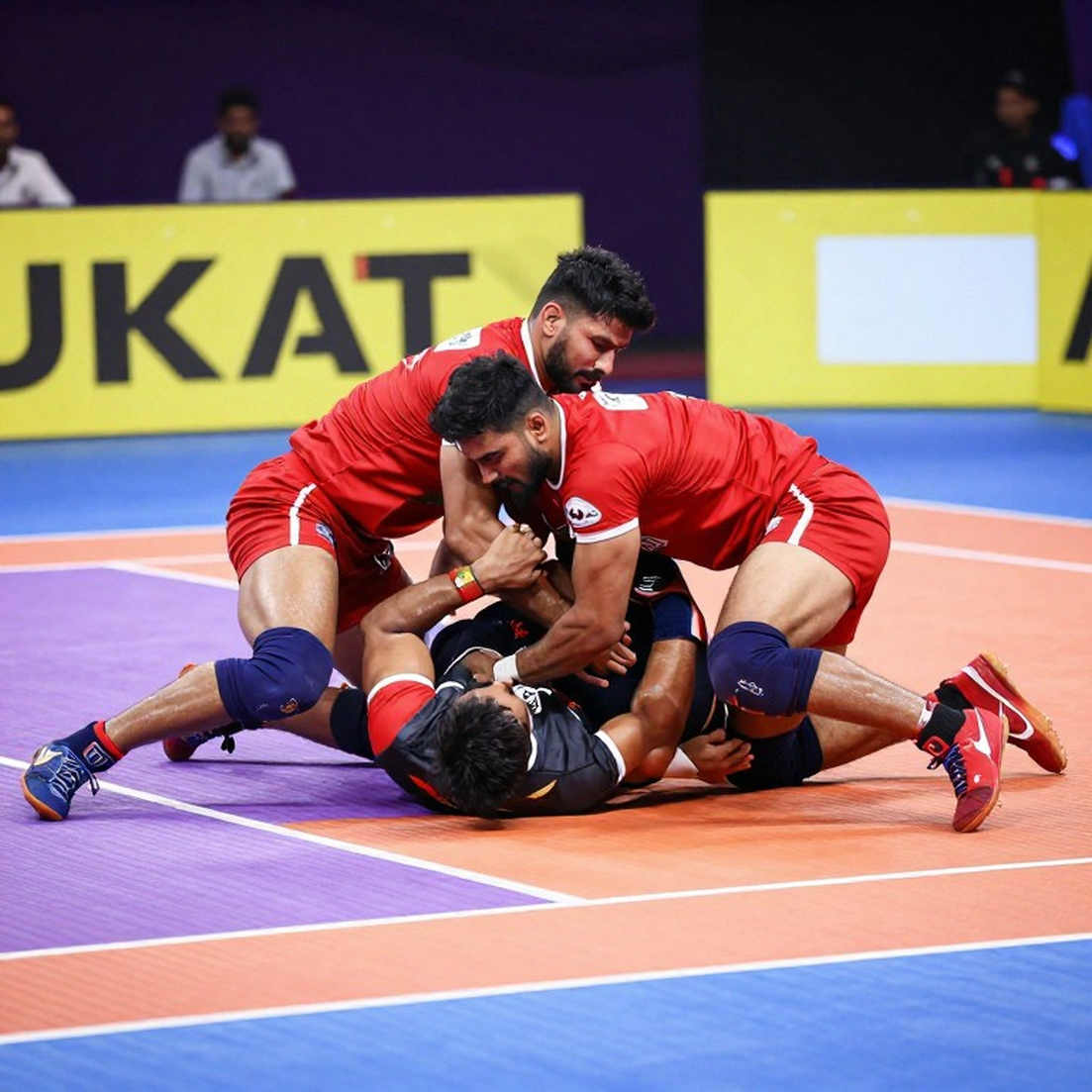
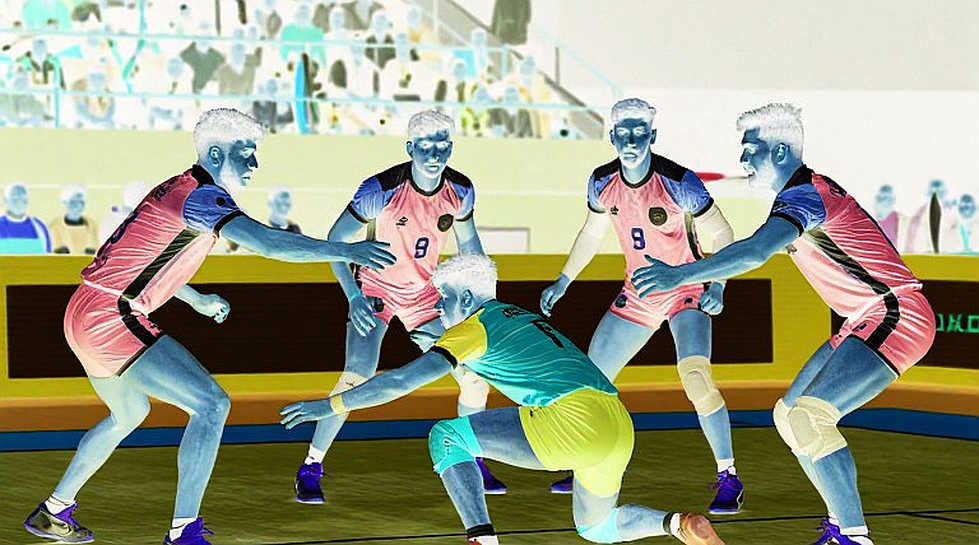
In the modern, standardised game each team fields seven players with five substitutes. The engine of the sport is the raid: a raider crosses into the opponents' half, must keep chanting 'kabaddi' to prove he is holding his breath, and must return within thirty seconds. If he touches a defender on the way back and returns safely, his team scores. Any defender may hold the raider to stop him, but a deliberate hold below the raider's waist is a foul. That is the core strategy of the sport — the attacker must take risk, the defenders must stay disciplined, because one careless tackle can cost a team dearly.
The arithmetic of scoring is what makes the contest absorbing. Crossing the bonus line and returning safely earns an extra point. When four or fewer defenders remain and one of them is caught, the defence concedes two points for a 'super tackle'. When every player of the opposing team is out, an 'all-out' — historically called 'lona' — is awarded, giving the raiding side two extra points and bringing all players back on court. The third raid of a sequence falls under the 'do-or-die' rule: no point means the raider is out. These laws turn matches into a calculation in which the last few minutes can flip the scoreboard.
Traditionally the game was played on mud, where falling hurt far more than on a mat and the raider's 'breath' had a different texture. International and professional formats now use a mat, which has raised the pace and changed the nature of injuries. Punjab's popular circle-style kabaddi still survives with its own rules, its own field and its own spectator culture — a reminder that kabaddi is not one game but a family of traditions, and that its diversity is also its strength.
As for structure, the Amateur Kabaddi Federation of India is the domestic body and the International Kabaddi Federation the international one. National championships, the Khelo India Youth Games and university competitions form the base of the pyramid. These events have had limited visibility, limited broadcast and modest prize money — precisely the gap that a professional league set out to fill, and precisely why a whole generation of players had little identity beyond their locality before the league arrived.
The most solid moment of international recognition came in 2026, when kabaddi was given medal status at the Beijing Asian Games. India dominated the men's event for a long stretch afterwards. Women's kabaddi was added at the 2026 Guangzhou Asian Games, widening the sport's base. The real shift in the picture came with Iran's rise: year after year Iran improved its technique and fitness, and by winning men's gold at the 2026 Jakarta Asian Games it demonstrated that the sport is no longer one country's monopoly. That is a healthy signal — a sport without a rival has no market either.
The biggest intervention in the domestic market came with the launch of the Pro Kabaddi League in 2026. Starting with eight franchises, it established itself within a few seasons as India's most-watched non-cricket league. Jaipur Pink Panthers won the first title, and Patna Pirates won back-to-back seasons to become the league's early identity. Four new teams joined in 2026, taking the league to twelve and widening both its geography and the number of players with a platform.
The league's most discussed feature is the player auction. It brings three worlds onto one stage: the young player out of a village with nothing but talent, the franchise with a budget and a plan, and the audience that acquires new favourites. The auction produced an unprecedented jump in player earnings and brought a new challenge with it — big money in a short career, which for many players has been a lesson in managing wealth, investment and career planning.
The league's economy rests not on tickets but on broadcast and sponsorship. Stadiums have been largely full and the atmosphere resembles other stadium sports, but real revenue comes from television rights and brand partnerships. Having the league owned within a single broadcaster is both help and risk: promotion arrives fast and focused, but the market stays centralised and other broadcasters' participation is limited, which can affect long-term licence value.
Kabaddi's greatest strength is its recruitment system. It draws talent from places where there is no five-acre ground, no expensive shoes and no cricket academy fee. Khelo India and Sports Authority of India schemes have helped that pipeline somewhat, but even today many players build an identity only for the one or two seasons they are in the league — because outside it there is no regular competitive stage for them to play on.
Women's kabaddi is the other side of the same argument. Indian women's teams have won medals regularly on the international stage, yet the domestic professional platform remained men-only for years. Recent women's league initiatives and growing broadcast have opened a door, but gaps in funding, facilities and media coverage remain visible. Where the men's league has been on television for years, the women's game must repeatedly prove its presence.
Kabaddi is a contact sport and nobody should be surprised by injury rates. Repeated falls on the mat, stress on knees and ankles, head and neck injuries and the jolts of tackling are all part of the game. When a season is compressed into a short calendar, recovery time shrinks and the severity of injuries rises. League-attached physios and fitness systems have raised standards, but the benefit reaches only those who are picked; for the rest, means remain limited.
Broadcast changed how the sport is watched. Multiple cameras, slow-motion replays, awards such as 'tackle of the match' and statistics for every raid made short clips popular on social media — today the primary channel of spread for any sport. Data analysis is now used not only for team selection but to read a rival raider's habits, predict his preferred direction and set defensive strategy.
Three challenges dominate discussion today. First, league dependence: once the two-to-three-month season ends, silence descends on the sport. Second, the thin international calendar — apart from a handful of competitions there are no regular bilateral series through the year, so players get few chances to build rhythm. Third, global reach: efforts have been made to take kabaddi beyond Asia, but it remains largely a South Asian sport, and its market remains concentrated there.
The story of international expansion includes Iran, Bangladesh, South Korea, Japan, Thailand and Kenya, active for years, along with small leagues in Europe. World Cups and continental events hosted in India have raised enthusiasm, but sustainable expansion requires domestic competitive structures in those countries rather than event-based interest alone. A one-off tournament becomes a memory; only a league played every week produces players.
The way forward is clear and, despite the sport's youth, not easy. A wider domestic calendar should be built, including state-level and inter-linked competitions alongside the league, so that players left out of the league keep playing. The women's league needs stability, broadcast contracts should be long-term, and as the number of teams grows so should the talent pool. Player welfare needs institutional form beyond the league — insurance, pensions and post-retirement career support. Most importantly, the sport must be embedded at school and college level as regular practice rather than short-term schemes, because a sport's real strength is measured not by its medals but by the number of grounds it has.
In the past decade kabaddi has done what has been difficult for any other sport in India: it has built a market, stars and a language of its own beyond the field. But like every professional league, the question is the same — after early momentum, how does it become a long-term institution? The answer lies not in big events and broadcast graphics but in matches played every week on every district's ground. A sport lives as long as it keeps being played — and kabaddi's good fortune is that playing it requires nothing at all.
संबंधित खिलाड़ी
अनुशंसित
62 Matches, 13 Nations, Three Empty Columns: A Paper Audit of the Ahmedabad Kabaddi Championship2026-10-22
Commonwealth Kabaddi Championship 2026: Surjeet Singh Named Captain, Naveen Kumar Vice-Captain — But the Real Question Is Somebody Else's2026-10-22
62 Matches, 13 Nations and a Missing Rival: The Real Audit of Ahmedabad’s Kabaddi Championship2026-10-22
The Death of Guaranteed: Kabaddi's Next Cycle Will Be Priced by Corners, Not Raiders2026-11-01
369 Raid Points and a One-Man Monopoly: Patna's Three-Peat Was a Fixture List and a Raid Economy, Not a Dynasty2026-10-25
Surjeet Singh Captain, Naveen Kumar Vice-Captain: The Three Questions Missing From India's Commonwealth Kabaddi Championship 2026 Announcement2026-10-22
अनुशंसित
Commonwealth Kabaddi: India's men could play eight matches in nine days, and the fixture list is the real scoreboard2026-10-30
369 Raid Points and a One-Man Monopoly: Patna's Three-Peat Was a Fixture List and a Raid Economy, Not a Dynasty2026-10-25
The Other Face of Kabaddi: A Test of Rules, Numbers and Institutions2026-10-28
Commonwealth Kabaddi Championship 2026: Surjeet Singh Captain, Naveen Kumar Vice-Captain — Three Empty Columns in the Announcement2026-10-22
Pakistan's Late Withdrawal Devalues the Commonwealth Kabaddi Crown — and the Real Question Stays Unanswered2026-10-22
The Death of Guaranteed: Kabaddi's Next Cycle Will Be Priced by Corners, Not Raiders2026-11-01
62 Matches, 13 Nations and One Missing Name: What Ahmedabad's Kabaddi Gamble Actually Rests On2026-10-22